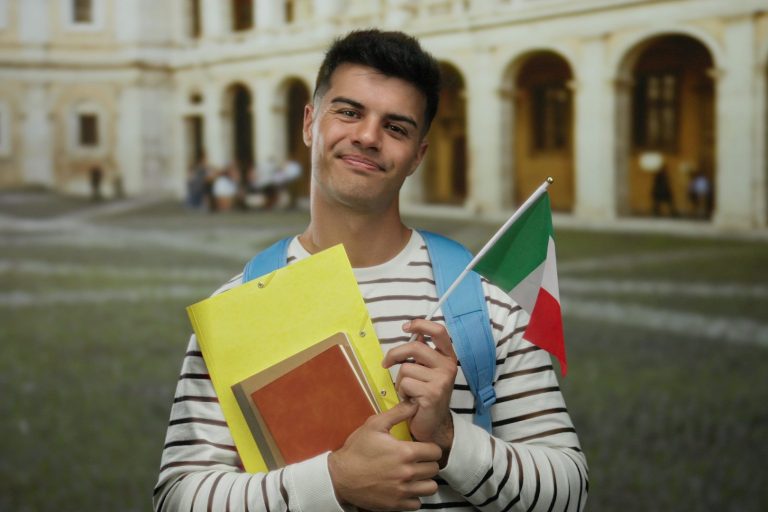
So, Dublin made the shortlist. Good choice. Dublin is compact, wildly sociable and only a bus ride from cliffs, mountains and the beautiful Irish sea. And, ok you should know it also rains; a bit (maybe a lot). So, make a brew and let’s find out why Dublin should absolutely make your Erasmus list if it hasn’t already.
Why Choose Dublin for Erasmus?

With two world class universities, Trinity College and UCD, making it in the global top 100 you know you will be surrounded by a likeminded crowd. Yes, Dublin students love a pint in the pub but learning also takes center stage, so you won’t be falling behind on your academics.
Did you also know Ireland has been in Erasmus since day one, as one of the 11 founding countries in 1987. It is no surprise then that thousands of students choose the green shores of Ireland for their semester abroad with 8,181 Erasmus students visiting in 2018, with Dublin welcoming as much as 43% of them
How to Apply for Erasmus in Dublin?
The golden rule you need to know about any Erasmus experience is that your home university nominates you first, then you apply to the Dublin university. Your international office is always step one.
So our recommended step process is:
- Start by checking your home university’s partnerships. You can only go where there’s an Erasmus agreement.
- Then you will apply internally and get nominated. Selection usually runs about a year ahead. Trinity, for example, says Erasmus students must be nominated before they can apply.
- The next step is to complete the host application. Keep in mind deadlines vary by university and semester, so it’s best to apply early
- Make sure to carefully review and sign your Learning Agreement. It lists your Dublin modules (a semester is usually 30 ECTS). Keep a few backups.
- Then it’s time to sort your grant. Your home university pays it, and the amount is set by your home country.
- Book accommodation as soon as you’re accepted. We cannot understate the importance of this. Dublin is a very busy student city and you will want to secure a place well ahead of time.
Do you need a visa? EU/EEA and Swiss citizens don’t. Non-EU citizens studying in an EU university may, so check Ireland’s immigration service early.
Which Universities in Dublin Accept Erasmus Students?
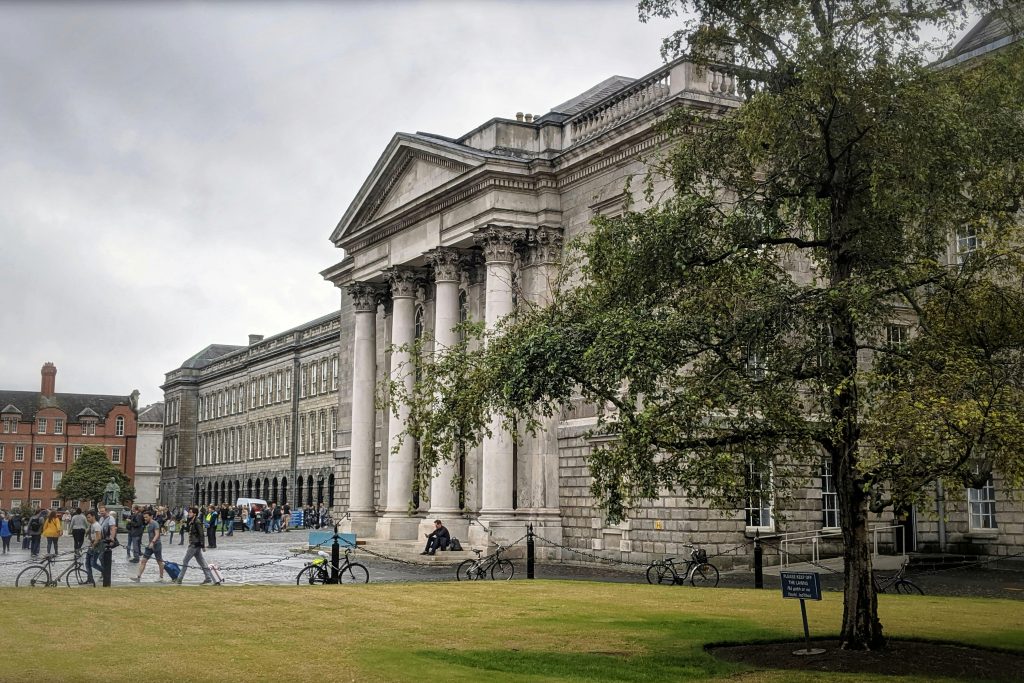
As we said earlier, it depends on your home university’s agreements, but the good news is Dublin has quite a few universities that have Erasmus partnerships. Fingers crossed your uni is one of the partners.
- Trinity College Dublin (TCD) is one of the most desired choices and it’s no surprise. The historic, cobbled campus and the perfect city centre location are certainly a draw. If you’ve ever read a book set in Dublin you will be living that perfect scholarly experience. The uni specializes in arts, law, medicine and computer science.
- University College Dublin (UCD) is another fantastic choice, situated in a huge, leafy south Dublin campus. Business, engineering and veterinary medicine students may want to consider this one
- Dublin City University (DCU) carries the modern and innovative feel on the northside of the city. And if your degree is future-looking such as business, communications and computing, it may be just the right spot for you
- TU Dublin is one we may be a bit biased about, since it’s so close to our buildings. It offers practical and industry-focused degrees and you’ll certainly go back with something to show in your portfolio or CV. Creative arts, hospitality and engineering are just some of its focuses.
- Maynooth University, while not often spoken about deserves to be in your spotlight, especially if you’d prefer more of a small-town campus, which is an easy train ride away from the business of Ireland’s capital
In general, Irish university experience may differ slightly from what you’re used to. Expect smaller, more discussion-based classes, and check exam dates (some fall in December or January) before booking flights home. Societies are huge too, and Trinity alone has over 170 so if you want to make some friends for life, that’s one way to immerse yourself in the Dublin experience
Want to know more about campus life and where to stay? Check our International Student Accommodation in Dublin guide.
How to Find Accommodation for Erasmus in Dublin?
We will start with a bit of honesty here – finding student accommodation, even as simple as a student room in Dublin can be a bit of a challenge with that many universities and its renowned standing in European education. The good news? Students who start early almost always find somewhere great.
How does Erasmus accommodation work?
You should know Erasmus rarely comes with a guaranteed room. Your host university will point you to its accommodation office, but you usually book and pay your own place, deposit included.
Your options:
- University residences: they are close to lectures, but have few spaces for visiting students. By term two they may all be booked out already
- Purpose-built student accommodation (PBSA): again, we are probably a bit biased here but what’s not to love with your own en-suite room, bills and Wi-Fi included, plus a ready-made community.
- Flat or house-share is the typical live-like-a-local choice but expect fierce competition, long leases and be aware of scams (never send deposit early)
- Homestay or short-term lets: by short-term we mean anything of about a few weeks to a month or two. There can work for when you’ve left your student accommodation for last minute but they can quickly become costly, although they can be a handy bridge while you search.
Transport, Leap Cards and the Airport
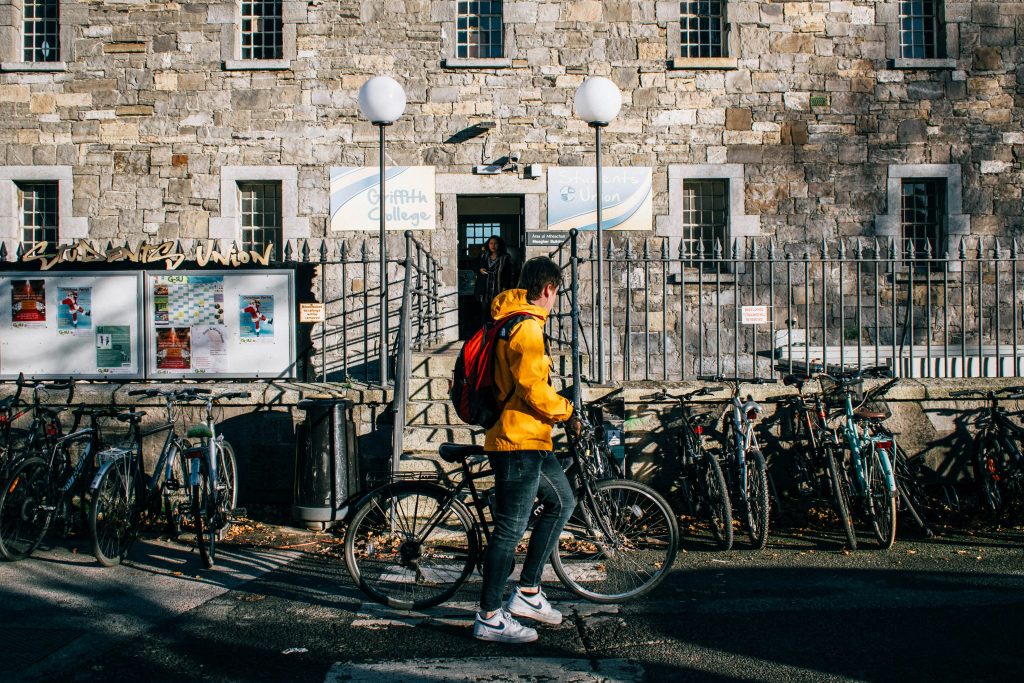
You cannot come to Dublin and not get a Leap Card. Get a discounted Leap Card in week one, trust us. With a Student or Young Adult card, a 90-minute journey costs €1, capped at €3 a day and €12 a week in the city zone.
There are several options you may want to explore:
- Young Adult Leap Card is for anyone aged 19 to 25, with the same 50% discount, making it the easiest option for most Erasmus students.
- There is a student leap card for full-time students but you’ll need to ask your international office if visiting students qualify.
- Dublin Bus, Luas and DART cover almost everywhere and you can tap on and off the Luas, and a pro tip form us – make sure to say “thanks” to the bus driver.
When you’re first arriving though, you’d want to know where you’re landing. Dublin Airport is about 10 km north of the city. Express coaches (Dublin Express, Aircoach) are easiest with luggage and very affordable, plus tickets are easy to buy on the day, outside of the airport (although buying it early never hurt). Dublin Bus routes 16 and 41 are cheaper and taxis suit groups. An Uber or Bolt from the airport will set you back around €30-40 and make sure that you’re waiting for them at the dedicated stand – they won’t come right in front of Arrivals.
Coming from the UK? Ferries run from Holyhead to Dublin Port.
Assistenza sanitaria
First and foremost if you’re an EU/SEE student make sure to bring your EHIC/TEAM. But then reade carefully the paragraphs below.
Irish healthcare trips up nearly every student who arrives here, and it’s almost always the same misunderstanding. Clear it up now and you could save yourself a €60 bill on your first week.
The family doctor in Ireland is called a GP. Simple enough. The confusion starts with the PCRS, the Primary Care Reimbursement Service, which sounds like a type of clinic but is really just the Health Service Executive’s (or HSE) accounts department, the bit that pays doctors for public work.
So a “PCRS doctor” isn’t a special breed of doctor. It’s an ordinary GP who happens to hold a contract with the HSE and can treat you on the public system. A GP without that contract only works privately, and you cover the full cost yourself. Two doctors, same waiting room, and that one contract decides whether you pay.
Pick a PCRS doctor and here’s what changes
This is the part the other guides skim over. If you’ve got your EHIC and you go to a GP who’s in the PCRS scheme, the visit can be free. Not €50, not €70. Free. But only if you ask for it.
The magic words, said at the desk when you book or arrive: “I have an EHIC and I’d like to be seen as a public patient.” If the doctor’s in the scheme and takes you on, the HSE picks up the tab for the appointment, for any prescription they write, and for a specialist later if they refer you.
Skip that sentence, or walk into a private-only practice, and you’ll pay the full whack like everyone else. Same cough, same five minutes with the doctor, wildly different bill.
So how do you know if a doctor is PCRS?
You can’t tell from the sign outside, so check first:
- Ring the surgery and just ask: “Are you in the PCRS scheme, and will you see me as an EHIC public patient?” Thirty seconds, done.
- Your local HSE health office keeps the official list of PCRS doctors nearby and will hand over the contacts.
- Easiest of all, start at your campus health centre. Trinity, UCD, DCU and TU Dublin all run student clinics that are cheap and used to exactly this, and they’ll point you onward if they can’t sort you out themselves.
Additional serious trick: do this while you’re well. Plenty of GPs aren’t in the scheme, and some that are won’t be taking new patients, so the worst time to start the search is at 8am with a fever.
Our suggestion in any case is that you can’t be too cautious so still get travel insurance as the EHIC doesn’t cover private care or a flight home, planning a long stay in Dublin, this is a suggestion to think about.
Ultimately you can always dial 112 or 999 in an emergency. If you access A&E without a GP referral or without passing through 112 or 999 for real emergency, expect a charge of around €100, dropped if a doctor sent you or you get admitted.
Coming from outside the EU? Different story
No EHIC, no PCRS route. For non-EU students, private health insurance isn’t a nice-to-have, it’s a visa requirement, usually somewhere from €150 to a few hundred euro for the year. Buy it before you fly, because you may be asked to show proof when you register with immigration.
The cards you’ll hear about
People will mention the Medical Card and the GP Visit Card. Both come down to income, and most international students earn their way out of qualifying, but if money’s genuinely tight it costs nothing to check at mymedicalcard.ie, where they look at your outgoings too, not just what you earn. A GP Visit Card makes the doctor free; a full Medical Card does a lot more.
The everyday stuff
For small things, the pharmacy is your first stop, no appointment needed, and the pharmacists at Boots or Hickey’s are generous with advice. Bring a copy of any regular prescription (additional trick here: ask your personal doctor at home for a prescription with drug’s generic name and not the brand name, e.g.: ibuprofen insteand of Nurofen as the brand name can be different and the pharmacy could not understand what you need), and don’t assume what’s sold over the counter back home is sold the same way here, because some of it needs a doctor’s note.
Discounts & Essentials
For your wellbeing you may want to visit the gym, wellness centre, cinemas, cafes or shops – but make sure to always flash your student card as it may get you a student discount. Don’t be shy, everyone does it, sellers know about it and there are often promos.
If you’re visiting only for a term, your home SIM should be fine but you could also make life even easier and get an Irish prepaid sim. You probably won’t need a local bank account so a Revolut, Monzo or your country’s bank card works for most.
And a little tip: remember to look right first when crossing as Ireland drives on the left.
What to Bring to Dublin for Erasmus?

We love discussing the weather here. And in that line of thought, make sure to pack for rain, wind and the odd glorious sunny afternoon – quite often you may experience them within the same day.
Here is our little orderly checklist:
- Documents: passport or ID, EHIC, insurance details, acceptance letter, Learning Agreement and accommodation contract
- Clothes: an actually waterproof jacket, waterproof shoes, layers and a swimsuit for pool or the occasional dip in the sea when the summer does make a visit
- Tech and bits: Don’t forget your type G plug adapters (Ireland uses UK-style three-pin plugs), a power bank and any prescription medication
- What you won’t need: bedding, kitchen kit and towels. Penneys (Ireland’s Primark) has you covered.
The Dublin Experience: What to Do?

Dubliners are friendly and you will find that Ireland in general is very, very welcoming. Expect to adore the greenery, enjoy an autumn walk and bump into classmates on Grafton Street. Oh, and if you love a morning coffee you will be on first-name basis with your local barista by week three.
But don’t be afraid to be a tourist. Maybe your classmates have seen all of these but you definitely need to as well. Here is a bit of a pocket-guide to must-see touristy bits (and yes, they’re touristy for a reason).
- Go to Trinity University even if it’s not your Erasmus unive and see Book of Kells and the Long Room library. It’s giving peak dark-academia energy.
- You CANNOT miss the Guinness Storehouse, even just the Gravity Bar view is worth it. And, if you do like a pint, get yourself an engraved glass. Our guide to finding the best Guinness in Dublin helps you rate pints like a local.
- You can do so much for free in Dublin – there’s the National Museum (including the “Dead Zoo”), National Gallery and Phoenix Park, where you can spot some wild deer.
- Get on the DART and enjoy some sea views. The Howth Cliff Walk is one not to miss.
- While you gotta do the Temple Bar, it’s not all about it. Students love to head to Camden Street, Whelan’s for live music and The Cobblestone for trad sessions.
- Depending on when you’re doing your Erasmus you may want to keep an eye out for these festivities you can join. Of course, first is Halloween, it started in Ireland, after all. On the 17th of March it’s St Patrick’s Day and oh you will love it.
And, if you have the time make sure to venture outside of Dublin – places like Glendalough and the Wicklow Mountains are about an hour away, with Galway, the Cliffs of Moher, Kilkenny, Cork and Belfast within day-trip or weekend range. See our guide to the best days out in Ireland from Dublin.
What Students Love about Dublin
It’s the people that really make Dublin a city like no other – Dubliners are funny, curious and happy to give you directions, and it’s only easy and natural to make friends through societies and pubs. Dublin has that European city feel with the sea on its doorstep, and fantastic nature and cheap weekend adventures just a train away.
So, are you ready for Your Erasmus in Dublin? Sort the paperwork, start your student room search early and leave plenty of room to be surprised and amazed. Still looking for somewhere to live? Explore Orla Student’s locations and find a fully furnished room that fits your Erasmus semester.
Sláinte, and see you in Dublin!