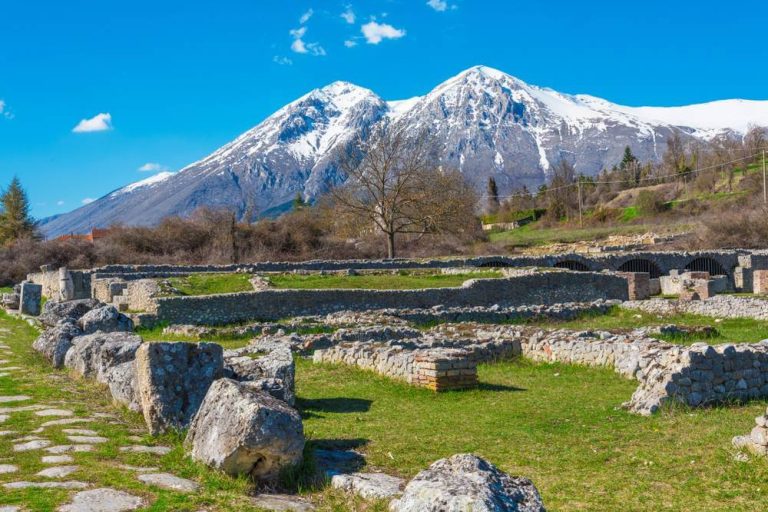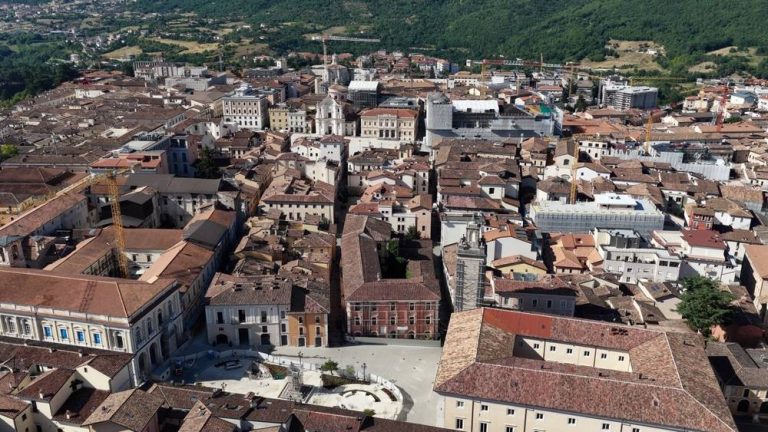
Nestled in the heart of Italy’s Abruzzo region, the medieval city of L’Aquila is a historic location that’s quickly transforming into one of the nation’s top student destinations. Stay in this place long enough, and the streets begin to speak through the stones, carrying stories of resilience, rebirth, and trade. Like many cities in the region, the history of L’Aquila was influenced by the Romans, but shaped by centuries of local culture.
If you’re looking to study at the University of L’Aquila in the near future, understanding the heritage and cultural significance of your new home is crucial to making the most of your experience. In today’s piece, we’ll be doing just that. We’ll take you on a journey through time, so you know that your time at university is as historic as it gets.
Where is L’Aquila and Why is its History Important?
The city of L’Aquila was founded by the coming together of several villages that were previously settlements of their own. Each community committed land, labour, and regional identities to the fledgling city. Over time, this collective origin shaped the culture of L’Aquila and its people.
Lying east of the capital city, Rome, L’Aquila sits in the Apennines, framed by the Gran Sasso mountains. This geography has long been advantageous to the city, as they controlled trade routes between Rome and the Adriatic coast, giving L’Aquila a unique economic and political pull that went far beyond its size.
From its very inception, L’Aquila was designed as a place of learning, trade, and self-governance. This foundation still epitomises what it means to live there.
Medieval Roots: A Plan for Shared Power
Unlike many European cities that grew naturally, L’Aquila was planned. It had walls, and a network of neighbourhoods tied to the founders of the city. Each area maintained its own church and piazza, that are still present today.
This structure encouraged collaboration, with decisions being debated and decided upon locally. Power was therefore not concentrated in a single palace, which ensured L’Aquila maintained its autonomy from external rule for centuries.
The city’s medieval prosperity came from the trade of wool and livestock, aided by its strategic position in the heart of Italy. Monasteries, libraries, and workshops flourished, giving rise to an intellectual revolution that saw education focus on theology, law, and new sciences.
Renaissance and Rebuilding
L’Aquila’s location may be strategic from a trade standpoint; however its geography has also meant that earthquakes impacted the area during the 15th and 18th centuries. Each time, the resilience of the people meant that the city was rebuilt.
This rebuild was progressive for the time. Structures were reinforced, and the layout of the streets was readjusted for safety. Knowledge from previous disasters was applied and has protected the city ever since.
Take a look at the buildings you see today. The layered architecture showcases Romanesque churches that sit beside Baroque housing as a result of necessity, not trends.
Modern History: Student Power
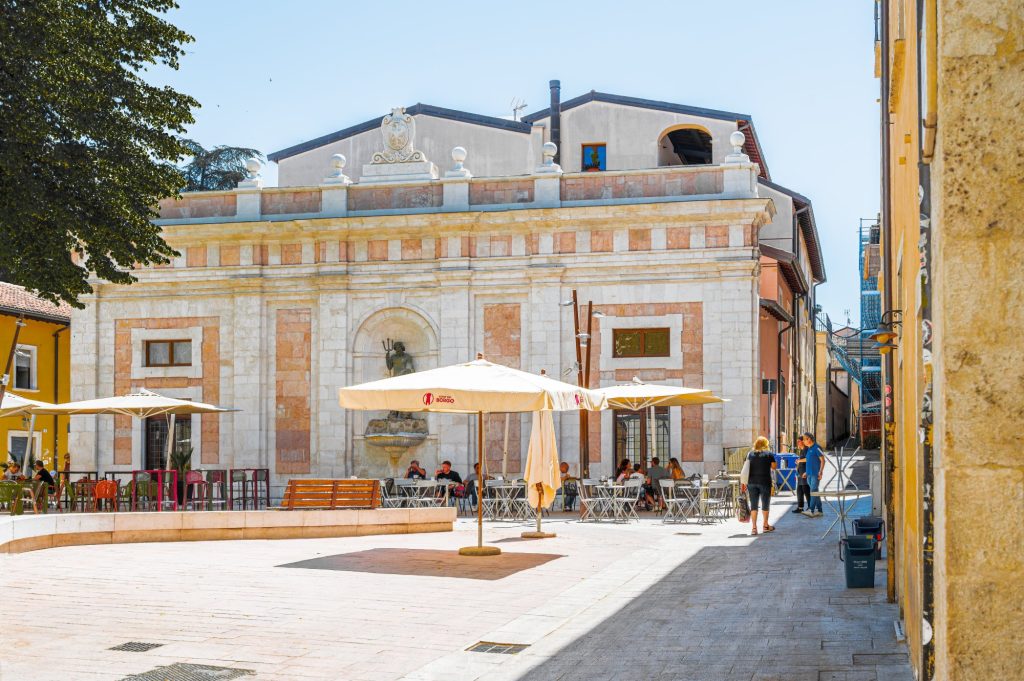
In 2009, a devastating earthquake struck L’Aquila once more. As in previous occasions, the city was damaged but has recovered in no small part due to the student population. For years, workers, cranes, and scaffolding defined the city’s historic centre, leading to a new-look L’Aquila.
Students were among the first locals to return to the city after this disaster, re-establishing the regional economy and bringing a normal pace of life back to L’Aquila. Research labs, libraries, and student accommodation became the pillars of the cities rebirth.
The University of L’Aquila
As a relatively new university in European terms (established in 1952), the University of L’Aquila is built upon the cities academic heritage rather than that of a single institution. It’s development mirroring that of the city it calls home. For centuries, L’Aquila has been a philosophic melting pot, with informal teaching taking place since the founding of the city.
Today, the university is central to L’Aquila’s modern identity. Campuses are spread across the city, encouraging movement rather than isolation. Libraries sit near residential areas. Lecture buildings are woven into everyday life.
This integration helps students feel at home here, and truly encapsulates ‘La Dolce Vita’, the lifestyle so many international students come to L’Aquila to enjoy.
Reddit Reveals: What Students Say About L’Aquila
L’Aquila isn’t the largest city in Italy, but it regularly comes up in student discussions online.
The main takeaway from a look at these conversations is that the students of L’Aquila cite its calmness and traditional Italian culture as a major talking point. It isn’t a place filled with distractions, but it provides a classic Italian lifestyle.
Locals are said to be friendly and welcoming to their student population, with many young people saying that their resident shopkeepers remember their names and orders whenever they need supplies.
Of course, the history of L’Aquila is referenced all the time. A city that predates the country it’s located in is no doubt a cultural icon, but the blend of old and new makes L’Aquila more unique than many similar cities in the region.
Regional Identities
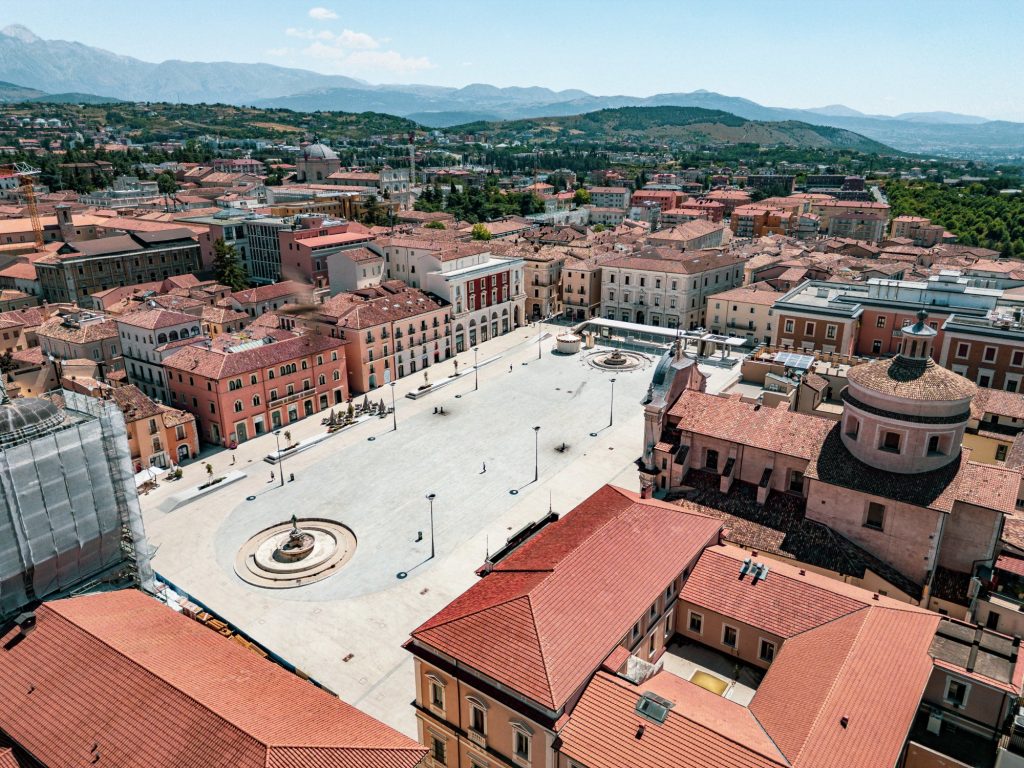
L’Aquila is the capital of the Abruzzo region, and understanding the importance of this regional identity is crucial if you want to feel at home in any Italian city. The locals take great pride in where they are from, and their stories are what defines them.
For a deeper cultural overview, Britannica offers a comprehensive guide to L’Aquila’s regional significance and the background on Abruzzo’s geography and culture.
Nature is never far here. Trails begin near bus stops. Snow and sun coexist within weeks. This closeness to landscape influences daily rhythms and wellbeing.
Sustainability, and Modern Student Life
Rebuilding after natural disasters pushed L’Aquila to think carefully about its future on numerous occasions. For this reason, the city has long spearheaded much of Italy’s progress on the green front. From energy efficient buildings to reduced car dependence, these issues became priorities in making the city safer and greener.
This development also meant the city wasn’t cut off from technological advancements, as some smaller enclaves in the region were. There is reliable transport, connectivity, and modern study spaces across the city.
Why Studying in L’Aquila is Unique
Unlike metropolitan cities like Rome and Milan, L’Aquila has a compact feel that encourages you to embrace the local culture. You can’t avoid the community here, you simply have to jump in and embrace it. Whether you choose to learn Italian or not, respecting where you are is important, so do your best to join in.
Over time, there’s a good chance you’ll never want to go home.
Write Your Own History in L’Aquila
If you’re in the process of comparing international destinations or just want to explore different student hubs in Italy, we can help. Explore our range of options for student accommodation in Italy and across Europe, as well as our fantastic options for young professionals looking to live on the continent a little longer.
The history of L’Aquila is far from finished, and if you’re studying here in 2026 and beyond, you’re writing your name into the story of this fantastic city.