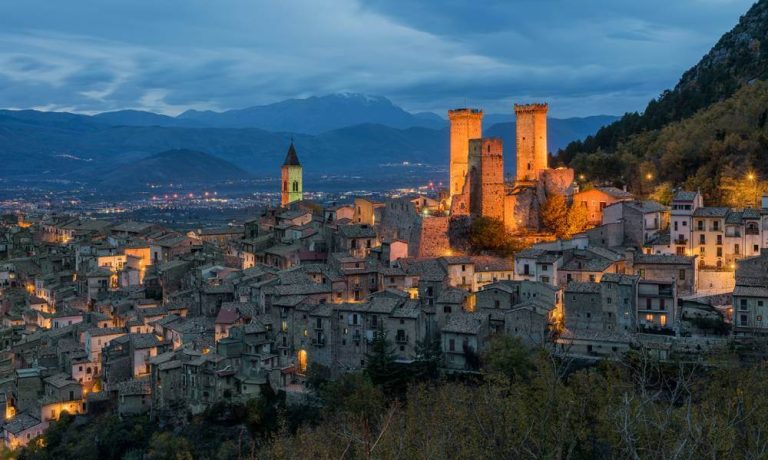
L’Aquila is one of Italy’s most remarkable and resilient student cities, offering an authentic Italian university experience in a stunning mountain setting. Nestled in the heart of the Abruzzo region at an altitude of 721 metres, this historic city in central Italy combines centuries of cultural heritage with a vibrant, close-knit student community. With approximately 20,000 students at the Università degli Studi dell’Aquila, students make up a significant proportion of the city’s population, creating a truly student-centred environment where academic life and local culture are deeply intertwined.
The Università degli Studi dell’Aquila is a prestigious public research university founded in 1596, making it one of Italy’s oldest institutions of higher learning. The university offers programmes across sciences, engineering, humanities, medicine, and economics, with growing numbers of courses taught in English to attract international students. Following the devastating 2009 earthquake, both the city and university have undergone remarkable reconstruction, blending restored historic buildings with modern facilities and creating a unique atmosphere of renewal and optimism.
The Best Neighbourhoods for International Students
L’Aquila’s student accommodation is spread across the historic centre and surrounding areas. The 2009 earthquake and subsequent reconstruction have shaped the housing landscape, with many students now living in areas outside the traditional centro storico while historic buildings continue to be restored. Most students choose to live in the Centro Storico, Pettino, Coppito, Pile, Collemaggio, or Santa Barbara.
Centro Storico (Historic Centre)
The Centro Storico is the heart of L’Aquila, a beautiful historic centre that has been painstakingly restored following the 2009 earthquake. Living here puts you at the centre of city life, surrounded by Renaissance churches, elegant piazzas, and the famous 99 Cannelle fountain. The main corso (high street) is lined with shops, cafes, and bars where students gather.
Restored apartments in historic buildings offer character and atmosphere, though availability varies as reconstruction continues. Piazza del Duomo and Piazza del Palazzo are focal points for social life. Many university departments are located in or near the centre. The Centro Storico suits students who want to experience authentic Italian city life and be at the heart of L’Aquila’s renaissance. Average monthly rent ranges from €200 to €350.
Pettino
Pettino is a residential area north of the historic centre that has become one of L’Aquila’s main student neighbourhoods. This modern suburb developed significantly after the earthquake as students and residents relocated from damaged areas. It offers practical, affordable accommodation with good connections to the city centre and university sites.
The neighbourhood features modern apartment blocks and some newer purpose-built student housing. Supermarkets, shops, and services cater to the student population. Buses connect to the centre and university campuses. Pettino suits students seeking affordable, practical accommodation with modern amenities. Average monthly rent ranges from €150 to €280.
Coppito
Coppito is home to the Università degli Studi dell’Aquila’s main scientific campus, including the faculties of Science, Engineering, and Medicine, as well as the San Salvatore hospital complex. Living in Coppito means being steps from these facilities, making it ideal for students in scientific and medical disciplines.
The area has student residences and private apartments serving the university population. The Gran Sasso Science Institute (GSSI), an international doctoral school, is also located here. While further from the historic centre’s social life, Coppito offers convenience for campus-based study and easy access to the surrounding countryside. Average monthly rent ranges from €150 to €270.
Pile
Pile is a residential area southwest of the centre, offering affordable accommodation within reasonable distance of both the historic centre and university facilities. This quiet neighbourhood provides a more local, residential experience away from the main student hubs.
The area features a mix of apartment buildings with some green space. Local shops and services meet daily needs. Bus connections link to the centre and campuses. Pile suits students who prefer a quieter residential environment and excellent value for money. Average monthly rent ranges from €140 to €250.
Collemaggio
Collemaggio is the area surrounding the magnificent Basilica di Santa Maria di Collemaggio, one of Abruzzo’s most important churches and a stunning example of Romanesque architecture. This neighbourhood just outside the historic walls offers a unique setting with the basilica’s park providing green space and the church itself a constant reminder of the region’s rich heritage.
The area has residential apartments with easy walking access to the centre. The open spaces around the basilica are popular for relaxation and outdoor activities. The neighbourhood suits students who appreciate historic surroundings and green space while remaining close to the action. Average monthly rent ranges from €170 to €300.
Santa Barbara
Santa Barbara is a residential area east of the centre, developed with modern housing and offering practical, affordable accommodation for students. The neighbourhood has good local amenities and provides a quieter alternative to more central locations.
The area features apartment complexes and some student housing options. Shopping centres and services are accessible. Bus routes connect to the centre and university sites. Santa Barbara suits budget-conscious students seeking modern accommodation in a residential setting. Average monthly rent ranges from €140 to €260.
Getting to L’Aquila as an International Student
L’Aquila is located in the Abruzzo region of central Italy, approximately 100 kilometres northeast of Rome. While the city doesn’t have its own airport, Rome’s airports provide excellent international connections, and the journey to L’Aquila is straightforward.
Rome Fiumicino Airport (FCO)
Rome Fiumicino (Leonardo da Vinci Airport) is Italy’s main international hub with direct flights to destinations across Europe, North America, Asia, the Middle East, and beyond. From Fiumicino, take the Leonardo Express train to Roma Termini station (approximately 30 minutes), then the ARPA or TUA bus service direct to L’Aquila (approximately 1 hour 45 minutes). Alternatively, buses run directly from Fiumicino to L’Aquila. The total journey takes around 2.5 to 3 hours and costs approximately €15 to €25.
Rome Ciampino Airport (CIA)
Rome Ciampino serves budget airlines including Ryanair and Wizz Air with connections across Europe. From Ciampino, take a bus or train to Roma Termini, then the bus to L’Aquila. Some direct bus services may operate to L’Aquila. The total journey takes around 2.5 to 3 hours and costs approximately €12 to €20.
Pescara Airport (PSR)
Pescara Airport on the Adriatic coast is the closest airport to L’Aquila, approximately 100 kilometres east. It offers limited connections to European destinations, primarily via Ryanair. Bus or car connections to L’Aquila take approximately 1 hour 30 minutes via the A24/A25 motorway. This can be convenient for some European routes.
By Bus from Rome
Regular ARPA and TUA buses run between Rome (Tiburtina station) and L’Aquila throughout the day. The journey takes approximately 1 hour 45 minutes and costs around €8 to €12. Buses are comfortable and frequent, making this the most popular route for students travelling to and from Rome. Book tickets online or at the station.
Getting Around L’Aquila
Walking: L’Aquila’s compact size makes walking the primary way to get around. The historic centre is easily walkable, and most daily needs can be met on foot. The university’s central departments are within walking distance of each other. The hilly terrain provides good exercise, and walking allows you to appreciate the city’s architecture and mountain views.
Buses: AMA L’Aquila operates the city bus network connecting neighbourhoods to the centre and university campuses. Single tickets cost around €1.20, with discounted student passes available. Key routes connect Pettino, Coppito, and other student areas to the centro. Buses also run to surrounding towns and ski resorts in season.
Cycling: Cycling is possible in L’Aquila, though the hilly terrain and mountain climate make it more challenging than in flatter Italian cities. Some students cycle for local journeys in good weather. The surrounding countryside offers excellent cycling for enthusiasts.
Cars: Some students have cars, which are useful for accessing ski resorts, the coast, and exploring Abruzzo. Parking is available in most neighbourhoods. However, a car is not necessary for daily student life in L’Aquila itself.
Regional Transport: Buses connect L’Aquila to Rome, Pescara, and other regional destinations. The city doesn’t have a train station, but bus connections are good. Rome is under 2 hours away, making day trips and weekend visits easy.
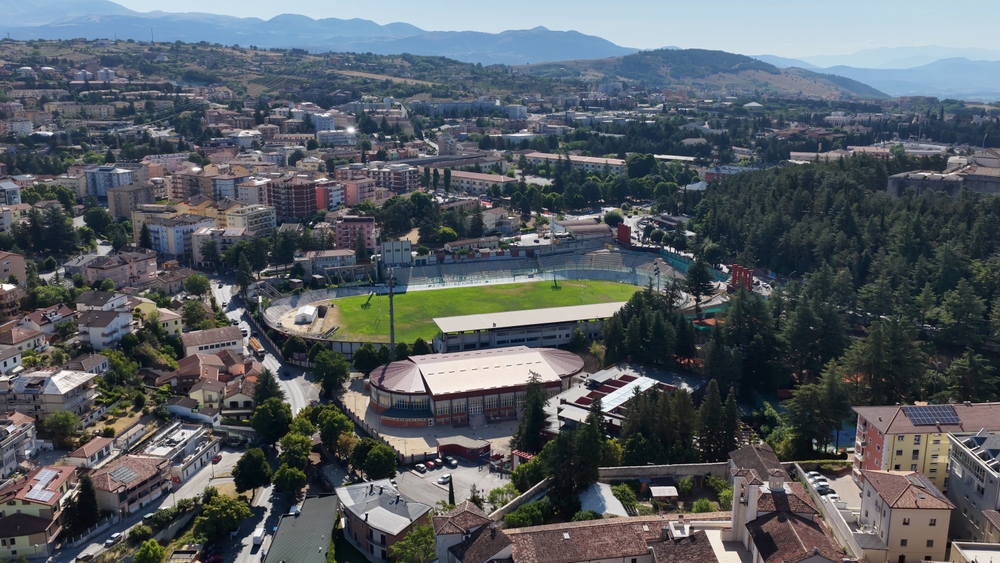
University in L’Aquila
Università degli Studi dell’Aquila (UNIVAQ)
The Università degli Studi dell’Aquila (UNIVAQ) is a prestigious public research university founded in 1596, making it one of Italy’s oldest institutions. With approximately 20,000 students across seven departments, it offers a comprehensive range of programmes from undergraduate to doctoral level. The university has a strong research profile, particularly in physics, where collaboration with the nearby Gran Sasso National Laboratory provides unique opportunities.
UNIVAQ is particularly renowned for Physics, Engineering, Computer Science, Medicine, and Biotechnology. The university offers an increasing number of programmes taught in English, including degrees in Physics, Computer Science, and Engineering, making it accessible to international students. Facilities are spread between the historic centre and the modern Coppito campus. The university participates fully in the Erasmus+ programme and has partnerships with institutions worldwide. International students benefit from a dedicated welcome office, Italian language courses, and support services.
Gran Sasso Science Institute (GSSI)
The Gran Sasso Science Institute is an international doctoral school established in 2012, offering fully-funded PhD programmes in Physics, Mathematics, Computer Science, and Social Sciences. Based in L’Aquila, GSSI attracts exceptional students and researchers from around the world. The institute has strong links with the nearby INFN Gran Sasso National Laboratory, one of the world’s leading facilities for particle physics and underground experiments.
GSSI offers four-year PhD programmes with full funding including tuition waiver, accommodation, and a generous scholarship. Teaching is in English. The small, international community creates an intensive research environment. For graduate students in relevant fields, GSSI represents an exceptional opportunity to study in L’Aquila with world-class resources and funding.
Cost of Living in L’Aquila for International Students
L’Aquila is one of Italy’s most affordable student cities, offering exceptional value compared to Rome, Milan, Florence, or Bologna. The low cost of living allows students to enjoy a comfortable lifestyle and explore the region without financial stress.
Accommodation (Monthly)
Pile: €140 to €250
Santa Barbara: €140 to €260
Pettino: €150 to €280
Coppito: €150 to €270
Collemaggio: €170 to €300
Centro Storico: €200 to €350
University residence (Casa dello Studente): €150 to €250
Private studio apartment: €300 to €450
Food, Transport and Other Costs
Budget around €150 to €220 per month for food. University canteens (mense) offer subsidised meals from €3 to €6 depending on your ISEE income bracket. Supermarkets like Conad, Eurospar, and discount stores offer good value for self-catering. Local markets sell fresh produce at excellent prices. Eating out is affordable, with pizza from €5 to €8 and a full meal from €10 to €15. Coffee at the bar costs around €1.
Transport costs are minimal as most students walk. A monthly bus pass costs approximately €25. Mobile phone plans with data cost around €8 to €15 per month. University sports facilities are inexpensive, and gym memberships cost around €20 to €40 per month. Ski passes for Campo Felice and other nearby resorts are available at student rates.
Realistic Monthly Budget
Budget-conscious students can live very comfortably on €500 to €700 per month in L’Aquila. A typical student spending on mid-range accommodation and moderate social activities should budget €700 to €900 per month. For non-EU students requiring a visa, you must demonstrate financial means of approximately €6,000 per year (varies by requirements) plus tuition fee payment. L’Aquila’s low costs make these requirements more manageable than in larger Italian cities.
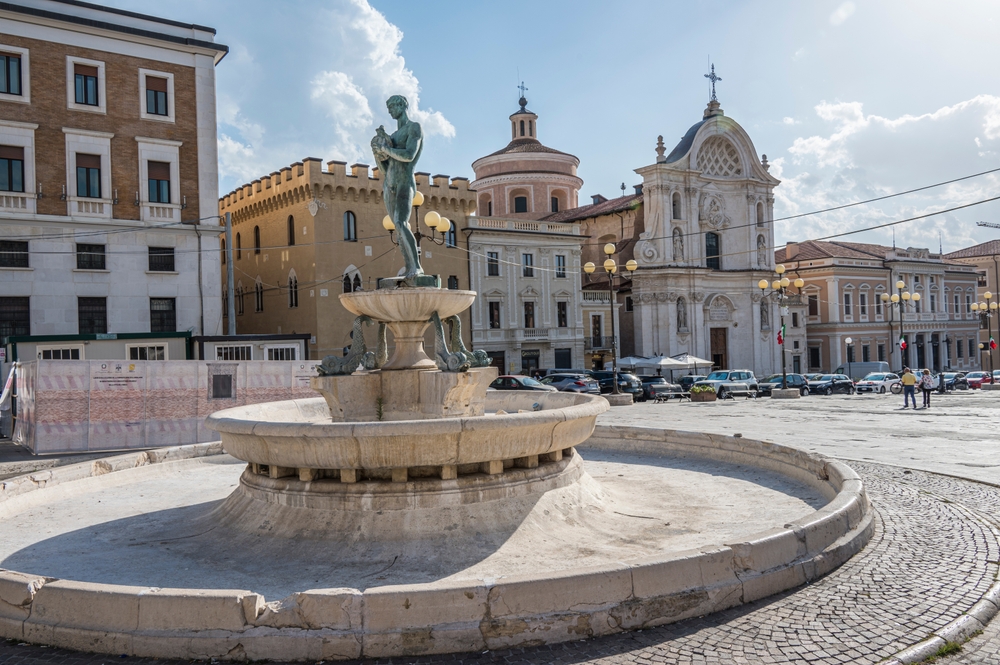
International Student Community in L’Aquila
L’Aquila has a growing international student community, with students from across Europe through Erasmus+ programmes and beyond. While smaller than Italy’s major cities, the tight-knit community means international students quickly form close friendships. ESN (Erasmus Student Network) L’Aquila organises events, trips, and social activities for international students throughout the academic year.
The university provides dedicated support for international students including an International Welcome Office, Italian language courses at various levels, help with permits and bureaucracy, and orientation events. The smaller community means more personal attention and support. Italian students are generally welcoming and curious about international classmates, making integration easier than in more anonymous big-city environments.
L’Aquila’s food scene offers authentic Abruzzese cuisine, one of Italy’s most distinctive regional traditions. Arrosticini (lamb skewers) are the signature dish, available at restaurants and sagre (food festivals) throughout the region. Fresh pasta, mountain cheeses, and locally produced saffron feature prominently. The university mensa offers affordable daily meals. Local pizzerias, trattorias, and bars provide student-friendly eating options. The aperitivo tradition offers drinks with free snacks in early evening.
L’Aquila’s nightlife is intimate but lively, centred on the bars and locali of the historic centre. The corso comes alive in the evening with students gathering for aperitivo and late-night drinks. Student parties and events organised by university groups provide social opportunities. While not comparable to Rome or Milan, L’Aquila’s size means everyone knows everyone, creating a friendly, social atmosphere. For bigger nights out, Rome is under two hours away for weekend trips.
What Makes L’Aquila Special for International Students
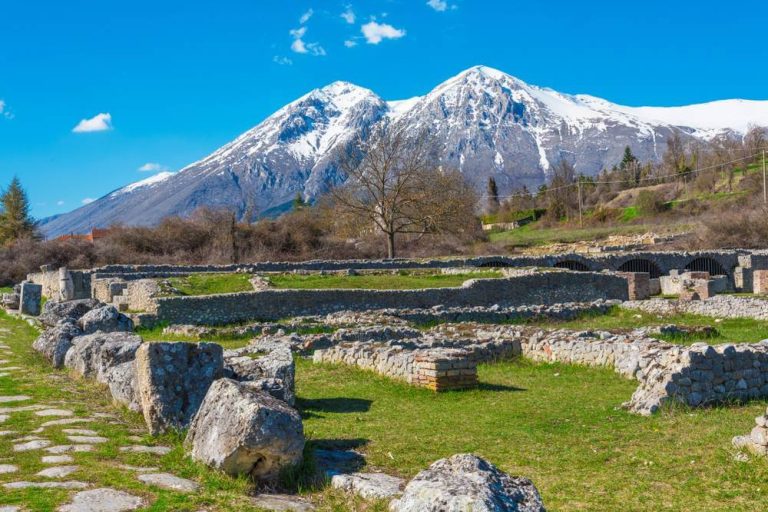
Gran Sasso Mountains: The highest peaks in the Apennines are on your doorstep. Gran Sasso d’Italia rises to 2,912 metres, offering spectacular hiking in summer and skiing in winter. Campo Imperatore, the ‘Little Tibet’ plateau, provides stunning high-altitude landscapes just 30 minutes from the city.
Affordable Skiing: Multiple ski resorts including Campo Felice, Ovindoli, and Roccaraso are within an hour’s drive. Student ski passes are affordable, and the season typically runs from December to April. Few European university cities offer such accessible, budget-friendly skiing.
Authentic Italy: L’Aquila offers an authentic Italian experience away from tourist crowds. You’ll learn real Italian, experience genuine local traditions, and become part of a community rather than a visitor. This immersion is invaluable for truly understanding Italian culture.
Resilience and Renaissance: The city’s recovery from the 2009 earthquake is inspiring. Studying here means witnessing and participating in a community’s renaissance. The determination to restore L’Aquila’s heritage while building for the future creates a unique atmosphere of optimism and solidarity.
World-Class Research: The Gran Sasso National Laboratory (LNGS), located beneath the mountain, is one of the world’s most important physics research facilities. Students in relevant fields can access extraordinary research opportunities unavailable almost anywhere else.
La Fontana delle 99 Cannelle: This medieval fountain with 99 spouts (representing the 99 castles that founded L’Aquila) is the city’s symbol. It encapsulates the unique history and character of this remarkable place.
Rome Within Reach: The Eternal City is under two hours away by bus. Weekend trips for culture, sightseeing, and nightlife are easy and affordable. You get small-city living with big-city access.
L’Aquila FAQs
Is L’Aquila a good city for international students?
Absolutely. L’Aquila offers an authentic Italian university experience at exceptional value, with stunning mountain surroundings and easy access to Rome. While smaller and less internationally known than Italy’s major cities, its tight-knit community, affordable living, and unique setting make it ideal for students seeking genuine immersion in Italian life. The growing number of English-taught programmes and strong research reputation add to its appeal.
Is L’Aquila safe?
L’Aquila is considered very safe, with low crime rates typical of smaller Italian cities. The close-knit community and significant student population create a friendly, secure environment. Buildings have been reconstructed to modern seismic standards following the 2009 earthquake. The university and city have comprehensive safety protocols in place.
What is the weather like?
L’Aquila has a mountain climate distinct from coastal Italy. Winters are cold, with temperatures often below freezing and regular snowfall from December to March. Summers are warm but milder than Rome, with temperatures typically reaching 25-30°C but cool evenings. Spring and autumn are pleasant. The climate makes L’Aquila ideal for winter sports enthusiasts but requires proper cold-weather clothing. The clear mountain air and dramatic seasons are part of the city’s character.
Do I need to speak Italian?
For English-taught degree programmes, you can manage initially with English, particularly in scientific fields. However, learning Italian will greatly enhance your experience and is essential for daily life, making friends, and truly integrating into the community. The university offers Italian language courses for international students. L’Aquila’s smaller size and fewer English speakers compared to tourist cities actually accelerates Italian learning through necessity and immersion.
Ready to Book Student Accommodation in L’Aquila?
Now you have seen all that L’Aquila has to offer international students, it is time to explore our range of student accommodation in L’Aquila and across Europe.